
A bathroom vanity is more than a storage vessel. It is an architectural anchor. Too often, mass-produced units feel generic and flimsy, failing to meet the unique demands of a carefully considered layout. If you’ve struggled to find a piece that fits your exact dimensions or feared the longevity of tiled surfaces in wet environments, you’re not alone. A custom tiled vanity unit offers a different path. It represents a commitment to permanence. It prioritises the raw honesty of materials and the quiet strength of manual labour.
Specifying a bespoke piece requires a balance of technical precision and aesthetic intuition. You deserve a space that feels integrated and intentional. In this guide, you’ll discover how to specify a unit that balances architectural weight with the tactile beauty of hand-finished porcelain. You will gain confidence in the durability of porcelain slabs and learn how to achieve a seamless look between your basin and cabinetry. We move from the overarching philosophy of the workshop to the practical details of water-tight construction. This is how you create a truly unique, hand-finished feature that stands the test of time.
Key Takeaways
- Understand the transition from generic, modular bathroom furniture to permanent architectural structures that define the space.
- Distinguish between traditional tiled frames and solid porcelain slab construction to ensure structural integrity and a clean aesthetic.
- Evaluate the performance and tactile differences between a custom tiled vanity unit and natural travertine to suit your specific design requirements.
- Master the technical nuances of bespoke specification, from managing plumbing offsets to choosing between integrated basins and organic vessels.
- Discover the value of partnering directly with an artisan studio to ensure every detail reflects a commitment to manual precision.
The Artisan Surface. Defining the Bespoke Tiled Vanity
The bathroom is a sanctuary. It demands objects that reflect its purpose. A custom tiled vanity unit is not merely a piece of furniture placed against a wall; it is a permanent architectural installation. This shift from modular, off-the-shelf cabinets to integrated structures marks a return to intentional design. It prioritises the raw honesty of materials. It values the quiet strength of manual labour. By moving away from mass-produced solutions, we embrace a philosophy of permanence that defines the modern, high-end bathroom.
Mass-produced alternatives often feel cold and generic. They lack the sensory depth of a hand-finished surface. Our approach is rooted in the philosophy of slow making. This ensures a result that is both durable and deeply personal. Every cut is deliberate. Every joint is precise. This dedication creates an emotional connection between the creator, the object, and the end-user. To understand the depth of this craft, one can look at the history and types of tile, which reveals a long tradition of merging utility with artistry. In an age of disposable interiors, the hand-tiled surface stands as a testament to patience.
Beyond the Retail Standard
Off-the-shelf units often fail to meet the requirements of unique UK architectural layouts. Period properties and modern renovations alike frequently present awkward dimensions or plumbing constraints. A standard retail SKU cannot adapt to these nuances. We believe in a single-source design and manufacture process. This ensures that the aesthetic vision and the physical reality remain perfectly aligned. There is a profound value in the tactile nature of artisan-laid porcelain. It feels substantial. It feels permanent. It transforms a functional necessity into a focal point that respects the proportions of the room.
The Permanence of Porcelain
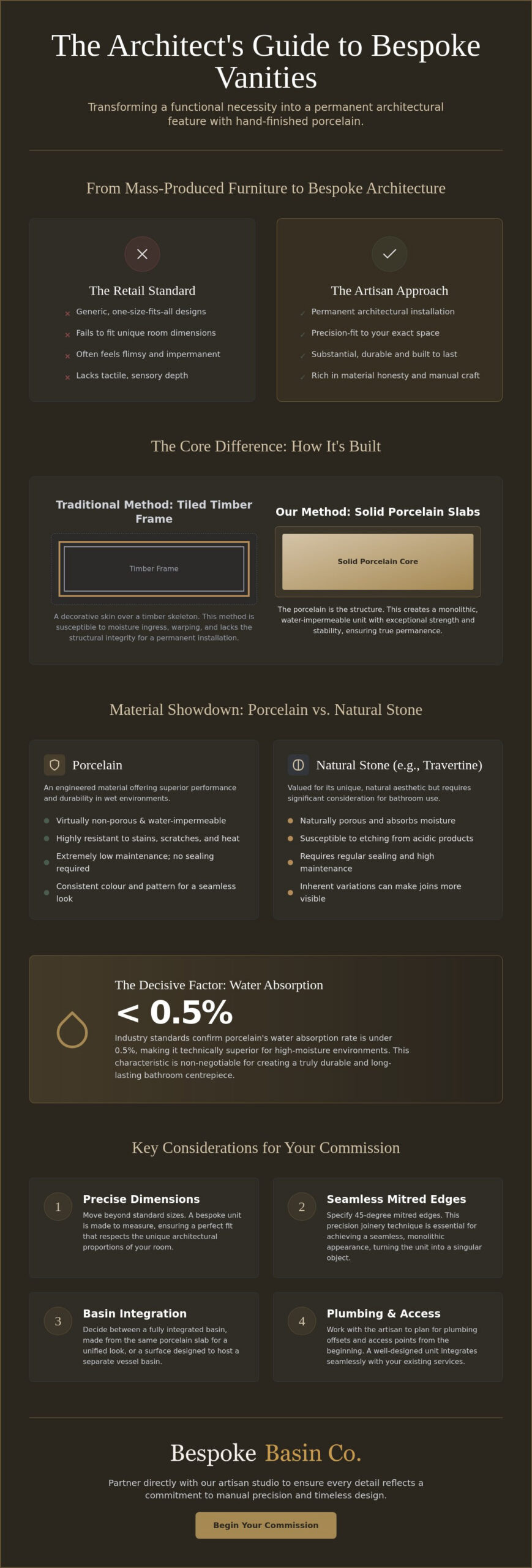
Modern porcelain slabs have revolutionised the custom vanity market. These are not just decorative skins; they are structural components. Porcelain is technically superior to many traditional materials. It offers exceptional moisture resistance and thermal stability. In wet environments, these traits are non-negotiable. Industry data confirms that porcelain tile maintains a water absorption rate under 0.5 per cent, making it the ideal choice for high-traffic bathrooms. These high-performance slabs allow for the creation of bespoke tiled basins UK, which act as the functional heart of the unit. The result is a seamless transition from the basin to the surrounding cabinetry, creating a unified architectural feature that resists the passage of time.
Specifying Materials. Porcelain Slabs vs. Traditional Tiling
The integrity of a custom tiled vanity unit begins with its internal skeleton. A common misconception in bathroom design is treating tile as a mere decorative skin applied to a timber frame. This approach is often flimsy. It lacks the architectural weight required for a permanent installation. Instead, we advocate for construction using solid, high-performance porcelain slabs. This method provides a level of structural permanence that timber cannot match. It ensures the unit remains stable whilst subjected to the constant humidity of a bathroom environment. When specifying your project, adherence to ANSI tiling standards ensures that the technical execution matches the aesthetic ambition of the design.
The finish defines the form. Mitred edges are essential for a truly bespoke result. They allow the porcelain to meet at a precise forty-five-degree angle, creating a seamless, monolithic appearance. This technique requires patience. It demands precision. Without it, the vanity feels like an assembly of parts rather than a singular architectural object. Choosing the right material is a journey of discovery. You might start by exploring our range of custom-sized porcelain slabs to understand the tactile possibilities available for your space.
Custom-Sized Porcelain Slabs
These slabs are the building blocks of the modern artisan workshop. Using made-to-measure porcelain reduces waste and ensures the structural integrity of the final piece. Unlike porous natural stones, porcelain is impervious. It has a water absorption rate of less than 0.5 per cent. This makes it the preferred medium for wet room environments where moisture ingress is a constant concern. By using large-format sections, we can achieve a wraparound effect. The pattern or grain flows across the vanity surface and down the sides without interruption. It creates a sense of visual continuity that defines high-end custom work.
Colour and Texture Curation
Organising your palette is a sensory exercise. It requires a balance between the existing textures in your bathroom and the new feature you are introducing. Grout is not just a functional necessity. It is a design element. It can be used to define a geometric shape or matched perfectly to the tile to disappear entirely. We often suggest balancing matte and gloss finishes. A matte surface feels grounded and honest. A gloss finish catches the light, which is particularly effective in smaller or darker spaces. This interplay of light and texture ensures the custom tiled vanity unit remains a dynamic part of the room throughout the day.
The Material Debate. Tiled vs. Travertine Vanity Units
Material choice is a statement of intent. It defines the relationship between the object and the architecture of the room, determining whether the vanity sits as a bold, geometric centrepiece or a soft, organic extension of the walls. Choosing between a custom tiled vanity unit and a solid stone alternative is a fundamental decision in the design process. It is a choice between two distinct architectural languages. One path leads toward the engineered precision of porcelain. The other embraces the ancient, tactile history of natural stone. Understanding the nuances of a tiled vs travertine vanity is essential for ensuring the final installation aligns with your lifestyle and aesthetic vision.
Whilst porcelain provides an impervious surface, travertine is a sedimentary rock characterised by its porous nature. This porosity requires a specific approach to maintenance and sealing. According to the Natural Stone Institute guide, the physical properties of stone dictate how it must be treated in wet environments to prevent staining or moisture-related damage. In a high-end UK bathroom, where humidity levels fluctuate, this distinction becomes a practical consideration alongside the visual appeal. Both materials offer a sense of permanence that mass-produced units cannot achieve, yet they respond to the environment in very different ways.
The Case for Travertine
Specify a travertine vanity unit when the goal is to introduce organic warmth. It carries a quiet, historical weight. Because travertine is formed by mineral springs, each block contains unique, non-repeating patterns that no manufactured process can truly replicate. The maintenance of stone is a ritual of care. It involves periodic sealing and the use of pH-neutral cleansers. For many, this involvement strengthens the connection to the object. It is a reminder of the material’s origin. Over time, natural stone develops a patina, a gradual change that is often seen as a mark of quality amongst those who appreciate materials that age gracefully.
The Case for Custom Tiling
A custom tiled vanity unit offers unparalleled versatility for contemporary spaces. It allows for bold, geometric expressions that natural stone cannot easily accommodate. Porcelain is inherently resistant to staining and the chemical agents found in modern cleaning products. This durability makes it a pragmatic choice for busy households. Beyond its resilience, tiling allows for a “hidden” aesthetic. By using the same porcelain for the vanity as the walls or floor, you create a seamless, integrated look. This is particularly effective in compact UK bathrooms, where reducing visual clutter creates an illusion of greater space. The vanity appears to grow out of the room’s architecture, creating a unified and intentional sanctuary.
Design Considerations. Planning Your Custom Commission
Commissioning a custom tiled vanity unit is a transition from abstract desire to physical reality. It requires a methodical approach. You must account for the specific geometry of your bathroom. Precision matters. It is the silent partner of beauty. Plumbing offsets are often overlooked during the initial stages. Designing internal voids is essential for a minimalist exterior. It ensures that the utilitarian components are hidden, leaving only the clean lines of the hand-finished surface. Every detail must be intentional.
Weight is a critical factor. A bespoke porcelain unit possesses significant architectural mass. You must ensure that the bathroom structure, particularly the wall or subfloor, can provide adequate support. This is not a modular cabinet. It is a permanent installation. Early consultation with your installer or architect is vital to confirm that the structural integrity of the room matches the weight of the material. Every custom tiled vanity unit we create is a response to a specific set of needs, ensuring that the final piece is as robust as it is elegant.
Integrating the Basin
The basin is the focal point of the unit. You might choose the visual impact of an organic vessel basin. It sits atop the tiled surface as a distinct sculptural element, creating a play of light and shadow. Alternatively, a fully integrated tiled sink offers a seamless transition. The top and the bowl become one. This choice influences your tapware selection. Wall-mounted taps often complement the hand-finished nature of the unit, freeing up the surface and enhancing the sense of calm amongst the morning rush.
The Specification Checklist
A successful commission relies on a clear set of requirements. Consider the following elements during your planning phase:
- Dimensions. Measure height, width, and depth carefully. You must account for overhangs and how they interact with door swings or shower enclosures.
- Tile Selection. Always approve samples under your specific bathroom lighting. The way a colour behaves can shift dramatically between a workshop and a home.
- Mounting. Decide between a wall-hung floating effect or a floor-standing architectural plinth. A floating unit creates an illusion of space, whilst a plinth adds a sense of grounded permanence.
To begin your project, explore our options for Bespoke Tiling to see how these considerations come together in practice.
The Commissioning Process. Partnering with the Studio
Integrity is the foundation of our work. We refuse to cut corners. This is why Bespoke Basin Co. avoids subcontracted labour, choosing instead to keep every stage of production within our own walls. Every custom tiled vanity unit is crafted by hand in our workshop. This ensures uncompromising standards. Our in-house expertise in porcelain fabrication and artisan tiling allows us to control every nuance of the build. We aren’t just managing a project. We are guarding a standard of quality that mass-production cannot replicate. When you work with us, you are partnering with the people who actually handle the material. Those who wish to commission bespoke basin UK services will find that this direct, in-house approach is what separates a truly artisan result from a subcontracted compromise.
The journey begins with a conversation about form. It moves from the initial concept to the final installation with a steady, rhythmic pace. We don’t rush the process. Instead, we lead you through a logical progression that respects the time required for excellence. We discuss the physical state of the materials, the way the object will occupy your space, and the tactile sensations you wish to evoke. This methodical approach mirrors the “slow making” philosophy of the studio. It ensures that the finished, physical result is exactly as intended, standing as a permanent fixture of your home.
The Master Artisan Approach
Precision is non-negotiable. Every mitre must be perfect. Every grout line must be intentional. This level of detail meets the rigorous standards of high-end interior design, where the smallest imperfection can disrupt the calm of a space. Operating from a UK-based workshop allows for direct communication and absolute quality control. It bridges the gap between the initial spark of an idea and the finished object. You can see the result of this dedication in our Bespoke basin for residential project case study. It demonstrates how artisan form transforms a functional space into a sanctuary through manual precision.
Next Steps for Your Interior
Preparing your space is the first step toward a successful installation. We recommend requesting material swatches and porcelain slab samples early in the design phase. This allows you to feel the texture and observe how the light interacts with the surface in your own environment. A custom tiled vanity unit is a significant architectural addition, and seeing the material in situ provides confidence in your choice. When you are ready to discuss your project, our team is here to act as a thoughtful guide. Contact the Bespoke Basin Co. studio to begin the journey toward a more intentional, hand-finished bathroom.
The Future of Your Sanctuary. Defining Permanent Design
A bathroom should be a place of quiet reflection. It requires objects that are built to last. By choosing a custom tiled vanity unit, you move away from the temporary and embrace the permanent. You now understand how custom-sized porcelain slabs offer technical superiority over traditional timber frames. You recognise the delicate balance between the geometric precision of tiling and the organic warmth of travertine. These choices define the architectural language of your home. They ensure that your space remains a tactile, sensory sanctuary for years to come.
Integrity is found in the details. Our in-house artisan workshop is dedicated to this pursuit. We are specialists in custom-sized porcelain slabs. We never use subcontracted labour. This ensures that every mitre and grout line meets our uncompromising standards of quality. You deserve a piece that is as robust as it is beautiful. It is time to transform your vision into a physical, hand-finished reality. Commission your bespoke tiled vanity unit today. We look forward to partnering with you on the creation of a truly unique architectural feature.
Frequently Asked Questions
Is a custom tiled vanity unit waterproof?
Yes, when constructed with professional porcelain slabs and high-grade epoxy grouts. Porcelain has a water absorption rate of less than 0.5 per cent, making it impervious to moisture. Our construction process focuses on structural integrity to prevent water ingress. We use technical adhesives that ensure the unit remains a permanent, watertight fixture in your bathroom.
Can I choose any tile for my bespoke vanity unit?
Technically yes, but we recommend high-performance porcelain for its durability and moisture resistance. Whilst ceramic or natural stone tiles are options, porcelain slabs provide the best foundation for a custom tiled vanity unit. We guide you through selecting materials that balance aesthetic beauty with the practical demands of a wet environment, ensuring the tiles can be precisely mitred.
How do you clean and maintain a tiled vanity surface?
Cleaning requires only a soft cloth and pH-neutral cleansers. Porcelain is non-porous, so it resists staining from soaps and cosmetics better than natural stone. We suggest avoiding abrasive pads that might scratch the surface over time. Regular maintenance is minimal, as modern epoxy grouts are resistant to mould and discolouration, preserving the tactile beauty of the hand-finished piece.
Are these units suitable for small UK bathrooms?
Yes, they are ideal for compact spaces because they are built to your exact dimensions. A bespoke unit can be designed to fit into awkward corners or shallow alcoves where off-the-shelf furniture would fail. By using a wall-mounted design, you can keep the floor area clear. This creates an illusion of space whilst providing a functional, architectural focal point.
How long does the commissioning process take?
A typical project takes approximately six to ten weeks from the final design approval to delivery. This timeline reflects our slow making philosophy and our refusal to rush the curing or fabrication stages. Every unit is crafted by hand in our workshop. This period allows for the precise cutting of porcelain and the careful application of each tile to ensure longevity.
Can a tiled vanity unit be wall-mounted (floating)?
Yes, our units are frequently designed as floating structures to create a modern, minimalist aesthetic. This requires careful planning regarding the structural support of your wall. We design the internal frame to distribute weight effectively, ensuring the unit remains a permanent architectural feature. A floating vanity is particularly effective in smaller bathrooms where increasing visible floor space is a priority.
Do you provide the porcelain slabs or do I source them?
We provide the custom-sized porcelain slabs as part of our integrated service. This ensures that the material meets our exacting standards for thickness, thermal stability, and mitring capability. By managing the sourcing in-house, we maintain total control over the quality and continuity of the project. You can choose from our curated selection of finishes during your initial consultation.
What is the difference between an integrated sink and a vessel basin?
An integrated sink is built directly into the vanity surface using the same porcelain material for a seamless look. In contrast, a vessel basin sits on top of the counter as a separate sculptural element. Both options can be hand-finished. Choosing between them depends on whether you prefer a monolithic, architectural appearance or the tactile presence of an organic vessel basin.