
Texture is not an afterthought. It is the foundation. Most off-the-shelf sanitaryware lacks the soul required for a truly intentional interior. You have likely felt the frustration of a generic porcelain fixture disrupting the flow of a carefully curated space, whilst finding a piece that matches your custom tiling remains a constant challenge. This is where the hand tiled vessel basin transforms from a simple utility into a piece of living, textural architecture. It is a focal point grounded in the raw honesty of manual labour and the integrity of natural materials.
We understand that a home is a collection of deliberate choices. You deserve confidence in the longevity and hygiene of your sanitaryware, without the anxiety of subcontracted installation. This article explores the meticulous craftsmanship and architectural depth behind these bespoke creations. We will examine how texture defines a room, the technical precision required for seamless finishes, and the quiet satisfaction of a project managed entirely by the makers from the first sketch to the final placement.
Key Takeaways
- Understand the distinction between static, mass-produced ceramic and the rhythmic, multi-tonal surface of bespoke tiled sanitaryware.
- Discover why high-performance porcelain slabs are selected for their near-zero porosity and lasting integrity in demanding wet environments.
- Learn how a hand tiled vessel basin provides a unique geometric depth that anchors the architectural flow of a modern, intentional bathroom.
- Explore the bespoke commissioning process, ensuring your custom dimensions align perfectly with travertine vanity units or existing furniture.
- Gain confidence in the “slow making” philosophy, where every stage from material sourcing to final installation is handled by dedicated in-house makers.
Defining the Aesthetic. The Hand Tiled Vessel.
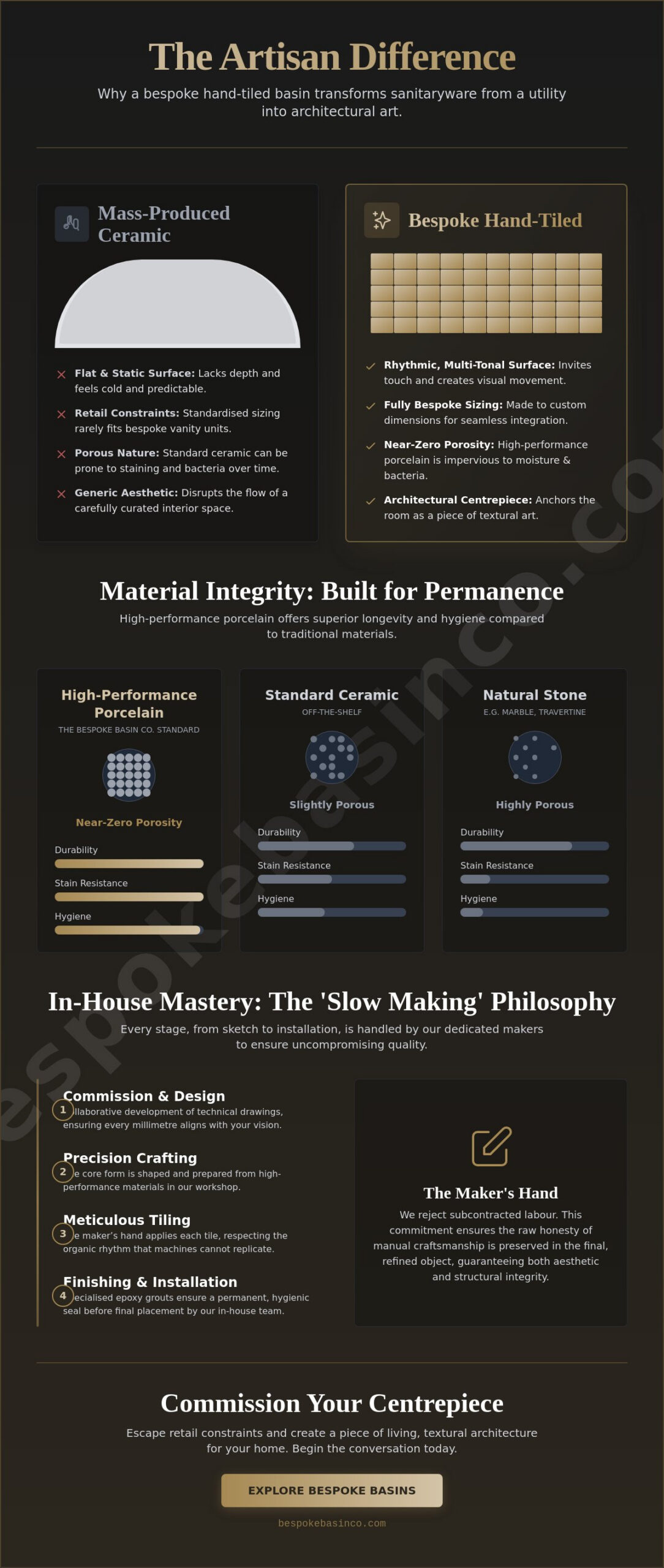
A hand tiled vessel basin is a bespoke sanitaryware piece where individual porcelain or stone tiles are meticulously applied to a core form. It is a departure from the mass-produced. Most ceramic basins offer a flat, static surface that feels cold and predictable. In contrast, a tiled vessel presents a rhythmic, multi-tonal surface that invites the hand. It is designed for those who curate intentional spaces. These are rooms where every object is chosen for its sensory depth rather than its convenience. The hand-tiled vessel is a union of architectural porcelain slabs and traditional manual labour.
Texture and Light. The Artisan Difference.
The beauty lies in the variation. Unlike a smooth, cast surface, the edges of each tile and the subtle depth of the grout lines catch the light in a way that shifts throughout the day. This creates a visual movement that anchors the room. It is a quiet confidence. The piece doesn’t shout for attention. Instead, it reveals its hand-crafted origins upon closer inspection. This technique draws inspiration from the long history of mosaic art, where small elements combine to create a cohesive, structural whole. You can organise your space around a specific palette, as the vast range of porcelain options allows for precise colour and finish customisation.
Beyond the Ordinary. Escaping Retail Constraints.
Standard UK showrooms often feel repetitive. They provide off-the-shelf basins that rarely align with the unique dimensions of a bespoke vanity or a specific architectural layout. Choosing a hand tiled vessel basin removes these retail constraints. It allows the fixture to be sized specifically for its environment, ensuring a seamless integration with the surrounding materials. For those seeking a softer aesthetic, the organic vessel basin offers a fluid, natural alternative to rigid geometric shapes. It mimics the irregularities found in nature whilst maintaining the durability of modern porcelain. This bespoke approach ensures the sanitaryware is a considered part of the architecture, not an afterthought.
Material Integrity. Porcelain and Precision.
Substance dictates longevity. A hand tiled vessel basin relies on the inherent quality of high-performance porcelain slabs. Unlike standard ceramic, these slabs possess near-zero porosity. This makes them impervious to the moisture and bacteria common in bathroom environments. We select materials that endure. The workshop process involves more than just assembly. It is a sequence of cutting, shaping, and the deliberate placement of every single tile to ensure the form remains functional whilst appearing sculptural. This process begins only after technical drawings are approved, ensuring every millimetre is accounted for before the first cut is made.
The Strength of Porcelain. Built for Permanence.
Natural stone is beautiful but porous. It stains. It scratches. When specifying a hand tiled vessel basin, porcelain offers a superior alternative, resisting the daily wear of a wet environment without losing its lustre. By using custom-sized porcelain slabs, we create a seamless material palette that flows from the vanity to the basin itself. These materials are chosen for their thermal stability. They expand and contract minimally, preventing the hairline cracks that often plague lesser fixtures. This focus on material choice is a fundamental aspect of texture in architecture, where the physical state of an object defines the atmosphere of the room.
Precision in the Workshop. The Maker’s Hand.
The process is tactile. A maker must feel the curve of the basin to organise the tile layout correctly. Organic forms require a specific rhythm that machines cannot replicate. We avoid subcontracted labour because it compromises the integrity of the tiling pattern. Every piece is handled in-house. This ensures that the raw honesty of the manual work is preserved in the refined final object. It is a slow making philosophy. If you value this level of dedication, you might explore our range of bespoke tiled basins to see how these materials are brought to life. We use specialised epoxy grouts and adhesives to guarantee a water-tight finish. These grouts are non-porous and stain-resistant, maintaining a pristine appearance for years. This isn’t just about aesthetics. It’s about creating a hygienic, permanent fixture for your home.
Texture as Architecture. Why Tiles Transcend Stone.
Stone is a single note. A hand tiled vessel basin is a symphony of geometry. Whilst solid stone slabs are often prized for their monolithic presence, they are limited by their own weight and uniformity. They cannot provide the intricate, repeating rhythm found in a tessellated surface. This geometric cadence creates an architectural depth that mirrors the structural lines of a modern wet room or vanity. It transforms a functional object into a piece of intentional design. Designers frequently select finishes that evoke the natural world, opting for matte, earth-toned mosaics or the sharp, architectural clarity of high-gloss porcelain. To understand why these patterns resonate so deeply in contemporary interiors, one can look at the history of decorative tile and its enduring role in defining domestic spaces.
Concerns regarding maintenance are common. Standard cementitious grouts can be difficult to manage in wet environments, leading to staining or moisture absorption. We address this through the use of modern epoxy grout technology. These materials are entirely non-porous and chemically resistant. They don’t absorb water, oils, or bacteria. This ensures that an artisan hand tiled vessel basin remains as hygienic and easy to clean as a cast ceramic sink, whilst offering a level of character that mass-produced items cannot match.
Visual Continuity. Integrating the Vanity.
A bespoke basin excels when it is part of a larger material narrative. It can perfectly complement a Travertine Vanity Unit, creating a sophisticated dialogue between the pitted, ancient texture of the stone and the precise, contemporary edges of the porcelain. If you are weighing the merits of each surface for your project, our guide to tiled vs travertine vanity material selection explores the tactile differences and functional longevity of both options in depth. We often utilise custom-sized porcelain slabs to achieve total material matching. This means the basin and the countertop are crafted from the same batch of material, ensuring the colours and textures are identical. This approach allows a designer to centre the fixture within a bespoke interior layout, making the basin feel like an extension of the room’s skeleton rather than an added accessory. This desire for visual harmony and matching elements often transcends interior design, as seen when families or groups choose coordinated apparel from Adorb Custom Tees to create a unified look for special occasions.
Sensory Design. A Tactile Daily Ritual.
Architecture is felt as much as it is seen. The physical sensation of water running over a ribbed, honed, or tessellated surface is vastly different from the slick, anonymous feel of polished ceramic. It is a tactile daily ritual. A substantial, hand-crafted object brings a sense of calm and permanence to a morning routine. Whether you choose a highly structured pattern or the more fluid lines of an Organic Vessel Basin, the result is an object that occupies space with intent. It is the difference between a fixture that is merely used and one that is experienced. These objects are designed to age gracefully, maintaining their integrity through years of daily use.
Specifying for Excellence. The Commissioning Process.
The journey from a conceptual sketch to a finished fixture is a narrative of patience. We reject the “add to cart” culture of mass retail. Commissioning a hand tiled vessel basin is a collaborative process that respects the “slow making” philosophy of our workshop. It begins with a dialogue. We guide you through selecting dimensions that suit your specific furniture or existing Travertine Vanity Units, ensuring the proportions feel balanced within the room’s architecture. This consultation phase is vital. It allows us to address technical requirements, such as drainage positioning and weight distribution, before construction begins. By managing the process in-house, we eliminate the risks associated with third-party contractors who may lack the specialised skills required for bespoke porcelain work. Architects and developers working on high-end builds will find a detailed overview of this methodology in our guide to commissioning a bespoke basin for commercial projects, which addresses the specific demands of high-traffic environments and architectural specification.
Consultation and Design. Finding the Form.
Designers often approach us with specific project requirements for custom-sized porcelain slabs. This stage involves selecting the tile size, colour, and grout spacing to achieve a precise aesthetic. Every detail is intentional. You should view the basin as a commissioned piece of art rather than a standard plumbing fixture. We provide technical drawings for your approval, a step that anchors the project in reality and ensures the final object meets your expectations. From this point of approval, the lead time for bespoke items is typically 4-6 weeks. This timeframe reflects the dedication required for manual tiling and the precision needed to ensure every tile sits perfectly within the pattern. For architects navigating the critical decision between bespoke vs standard basins UK, our architect’s guide to specifying a hand tiled sink provides the technical framework and aesthetic clarity required to commission with confidence.
Installation Mastery. The Final Step.
A bespoke project is only as successful as its installation. We provide in-house installation services to maintain the integrity of our work. This is particularly important for complex bespoke tiling projects where the transition between the basin and the vanity surface must be flawless. Our professional team coordinates the waste kit, the basin, and the vanity unit to ensure a water-tight and visually seamless result. We serve the entire United Kingdom, providing on-site laser templating and installation to ensure a perfect fit every time. This level of oversight guarantees that the craftsmanship of the workshop is carried through to the final placement in your home.
If you are ready to begin your project, you can commission your hand tiled vessel basin directly with our makers.
In-House Mastery. The Bespoke Basin Co. Standard.
Excellence is a choice. We refuse to cut corners. In a market saturated with mass-produced alternatives, our studio acts as a guardian of quality. Every hand tiled vessel basin we produce is a testament to the raw honesty of manual labour. We don’t rely on off-the-shelf retail products. We create them. This dedication ensures that the final object possesses a weight and permanence that generic fixtures lack. Investing in such craftsmanship provides long-term value for luxury residential and commercial projects alike. It is a commitment to substance over flashiness.
The maker’s dedication is visible in every joint. We believe that the integrity of a product is directly linked to the environment in which it is made. Our workshop is a space of patience. By maintaining uncompromising standards, we ensure that the architectural depth discussed in previous sections is never compromised by haste. This approach results in a piece of sanitaryware that is not just functional but also a significant contribution to the sensory experience of a home. It is a quiet pride that comes from knowing an object was built to last a lifetime.
The Artisan Studio. A National Resource.
The Bespoke Basin Co. is the premier UK partner for unique tiled sanitaryware. Our expertise extends beyond the single fixture. We provide a breadth of services, including custom hand tiled vessel basin designs and bespoke tiling for entire wet rooms. This national resource supports designers who require more than a standard solution. Whether you are specifying an Organic Vessel Basin for a private residence or a series of bespoke basins for a commercial project such as a boutique hotel, the studio manages the continuity of the work. This level of detail is often what distinguishes luxury destinations; for further inspiration on how regional crafts, such as those in Kerala, can define an environment, you might explore the cultural guides at tailormadejourney.com. We invite you to begin your commission for a truly one-of-a-kind interior.
A Legacy of Craft. The Final Result.
The materials we use are chosen for their ability to endure. This is a legacy of craft. A hand-tiled object does not follow trends. It sets a standard for timelessness. The result is a fixture that remains as striking in a decade as it is on the day of installation. It is a piece of living architecture that anchors the room. We take pride in being the makers who stand behind every project from the first approved drawing to the final placement. Enquire about your bespoke commission today.
Defining Your Space. The Architectural Anchor.
A bathroom should be more than a utilitarian room. It is a sanctuary defined by the objects within it. By choosing a hand tiled vessel basin, you move away from the limitations of mass-produced retail and towards a piece of living architecture. We have explored how the rhythmic texture of individual tiles provides a geometric depth that solid stone cannot replicate. This is supported by the near-zero porosity of high-performance porcelain, ensuring your fixture remains as hygienic as it is beautiful.
Our studio remains a guardian of these standards. We specialise in custom-sized porcelain slabs and manage the entire process through in-house manufacturing and installation. There is no subcontracted labour. There are no off-the-shelf compromises. Every project is a personal connection between the maker and your home, resulting in a permanent fixture that respects the “slow making” philosophy. It’s a journey from a shared idea to a tangible, tactile result.
Begin your bespoke commission with Bespoke Basin Co.
We look forward to translating your vision into a physical reality that anchors your interior for years to come.
Frequently Asked Questions
How do you clean a hand tiled vessel basin without damaging the grout?
Clean your basin with a soft cloth and a pH-neutral, non-abrasive detergent to preserve the finish. The epoxy grout we use is highly resistant to staining and moisture. It doesn’t require the aggressive scrubbing often associated with traditional cement grouts. Regular rinsing with warm water after use prevents soap scum build-up. Avoid using bleach or acidic cleaners, as these can dull the surface of the porcelain over time.
Are tiled basins as hygienic as standard ceramic sinks for daily use?
Tiled basins are exceptionally hygienic because we utilise non-porous porcelain and specialised epoxy grouts. Unlike standard ceramic sinks that can develop hairline cracks, our materials don’t absorb water or bacteria. Epoxy grout acts as a permanent seal that prevents mould growth within the joints. This combination ensures a sanitary surface for daily use. It is a durable solution for high-traffic residential or commercial wet rooms.
Can I match my basin to the custom porcelain slabs used in my shower?
You can perfectly match your basin to the custom porcelain slabs used throughout your bathroom. We often source materials from the same batch to ensure total visual continuity between the basin, the walls, and the vanity. This material matching is a core benefit of a bespoke commission. It allows for a seamless architectural flow that off-the-shelf products cannot replicate. Every element feels intentional and integrated.
What is the typical lead time for a bespoke hand tiled basin commission?
The typical lead time for a bespoke hand tiled vessel basin is 4-6 weeks from the date your technical drawings are approved. This timeframe allows for the meticulous manual labour required in our workshop. We don’t rush the process. Every tile is placed with precision to ensure the structural integrity of the final piece. We confirm delivery costs and timelines before your order is finalised to ensure transparency.
Do you provide professional installation for your basins across the UK?
We provide professional installation and on-site laser templating services across the United Kingdom for an additional fee. Managing the installation in-house allows us to maintain our uncompromising standards from the workshop to your home. Our team coordinates with your existing plumbing to ensure a perfect fit. This service is calculated on a per-project basis. It provides peace of mind that your commission is handled by the original makers.
Can the basin be made in an organic shape rather than a standard circle?
We specialise in creating the organic vessel basin, which features fluid, natural curves rather than standard geometric shapes. These forms are achieved through a careful core construction before the hand-tiling process begins. Tiling an organic shape requires a high level of artisan skill to ensure the pattern remains consistent across varying radii. It results in a sculptural object that mimics the softened corners found in nature.
Is a travertine vanity unit compatible with a heavy tiled vessel basin?
A travertine vanity unit is an excellent companion for a tiled basin provided the structure is designed to support the weight. Porcelain is a substantial material. We work closely with designers to ensure the vanity and basin are technically compatible. The pitted texture of travertine creates a beautiful sensory contrast with the precise edges of a hand tiled vessel basin. It is a sophisticated pairing for high-end interiors. For a deeper understanding of how these two surfaces compare in terms of durability and aesthetics, our guide on tiled vs travertine vanity surfaces provides a thorough material breakdown to inform your decision.
What happens if a single tile on the basin gets damaged or chipped?
A single damaged tile can be meticulously removed and replaced by a skilled maker without affecting the rest of the basin. This is a significant advantage over solid stone or cast ceramic, where a chip often requires the replacement of the entire fixture. Because every piece is hand-applied in our workshop, we maintain the ability to perform precise repairs. It ensures the longevity and permanence of your investment.