
The soul of a bathroom resides in the materials we touch every day. Quality is felt. It is not merely seen. When weighing the merits of a tiled vs travertine vanity, the choice often rests on the balance between intricate texture and the quiet weight of solid stone. You likely want a piece that feels like bespoke furniture. It should not feel like a clinical, mass-produced fixture. The fear of discolouring grout or the confusion between retail tiles and professional porcelain slabs often clouds the design process. We understand this hesitation.
Artisan craft. Functional permanence. This guide explores the tactile differences and functional longevity of hand-tiled versus travertine surfaces for your interior. We will show how custom porcelain slabs capture the organic beauty of natural stone whilst offering the resilience needed to last decades. You will gain the confidence to choose a material that honours both art and utility. The journey from raw material to finished object is one of patience and precision.
Key Takeaways
- Material character. The foundation of the bathroom. Recognise why the vanity unit serves as the visual and functional centre of a bespoke interior.
- Tactile rhythm. tiled vs travertine vanity. Evaluate the sensory differences between the rhythmic texture of hand-laid tiles and the monolithic weight of solid stone.
- Porcelain performance. Natural stone aesthetics. Discover how custom-sized porcelain slabs provide the warmth of travertine with superior moisture resistance.
- Artisan integrity. Functional longevity. Learn how high-density grout and professional porcelain ensure your hand-tiled vessel remains pristine for decades.
- The bespoke journey. A collaborative process. Gain confidence in commissioning a piece that feels like a unique work of furniture rather than a retail fixture.
Surface selection. The foundation of bathroom character.
The vanity unit is the anchor. It is the primary object that defines the room’s purpose. When deciding on a tiled vs travertine vanity, you are choosing the narrative of the space. One speaks of the slow, rhythmic application of hand-laid elements. The other speaks of the ancient, monolithic permanence of stone. This choice is the foundation of the room’s character. It balances sensory depth with architectural continuity. It is an intentional decision that prioritises substance over flashiness.
The role of the vanity in bespoke interiors
A bespoke vanity unit dictates the colour palette and the material flow of the entire room. It acts as the visual and functional centre. In private, sensory wet room spaces, the importance of tactile surfaces cannot be overstated. We move away from the thin, clinical feel of off-the-shelf retail products. Instead, we look for commissioned artisan pieces that carry the weight of their making. Travertine, a form of terrestrial limestone, offers a soft, matte finish that feels inherently warm. To understand its grounding presence, one might ask, What is Travertine? and discover its roots in natural sedimentary layers formed over millennia. This ancient aesthetic provides a sense of calm that mass-produced surfaces simply cannot replicate.
Evaluating your project requirements
Choosing a material requires an honest assessment of the household’s daily rhythm. You must consider the frequency of use amongst household members. This determines the level of material stress the vanity will endure. Modern UK wet rooms require a material that respects high moisture levels without compromising on beauty. The integrity of the surface is paramount in environments where water is a constant presence.
- Residential warmth. Tiled surfaces provide a rhythmic texture that feels human and intentional. They create a direct connection to traditional craftsmanship.
- Commercial permanence. Monolithic slabs offer a seamless look that suggests architectural continuity and strength. They are often chosen for their clean, uninterrupted lines.
The distinction lies in how the material occupies space. A hand-tiled surface invites the eye to follow the lines of the grout and the geometry of the tiles. A travertine unit asks the eye to rest on the quiet, organic variations of the stone itself. Both options prioritise longevity. They ensure the final object is a guardian of quality in your home. We believe in the raw honesty of natural materials and the value of slow production. Whether you choose the rhythm of the tile or the weight of the stone, the result should feel like a piece of bespoke furniture.
Tiled vanities. A study in texture and rhythm.
Texture is a language. It speaks through the hands. When choosing between a tiled vs travertine vanity, you are deciding how the light interacts with the surfaces of your home. Hand-tiled vessels provide a unique, organic feel. This is a quality that solid stone surfaces, for all their beauty, cannot replicate. There is a rhythm to the repetition of small forms. It is a study in precision and patience. Every tile represents a moment of intentional placement.
The tiled aesthetic is seeing a significant resurgence in luxury British interiors. It is an intentional design choice. It moves away from the clinical feel of mass-produced units found in standard retail showrooms. Artisan tiling involves precise mitring. It demands minimal grout lines. The result is a refined finish that feels like a piece of bespoke furniture. It is not just a functional wet area fixture. It is a statement of craft. Every edge is considered. Every alignment is intentional.
The appeal of the hand-tiled vessel basin
A hand tiled vessel basin functions as a piece of functional art. Individual tiles create a sophisticated play of light and shadow across the vanity. The surface is never flat or dull. It shifts as you move through the room. Customisation is the heart of this approach. You can coordinate colour, finish, and grout to match your specific interior palette. Whilst the historical use of travertine anchors a space in ancient tradition, the tiled vessel basin adds a contemporary, rhythmic energy that feels deeply personal.
Modern artisan tiling techniques
We have seen a shift in material performance. Standard ceramic is often too porous or fragile for high-use vanities. We utilise high-performance porcelain instead. It offers superior longevity. It resists moisture absorption with remarkable efficiency. Professional, in-house installation is vital to our process. We do not use subcontracted labour. This ensures water-tight integrity and a standard of finish that is difficult to find elsewhere. Every layout is organised to minimise seams in high-use areas. It creates a cleaner aesthetic that prioritises the continuity of the pattern. Precision is not optional. It is the standard we uphold in the workshop.
If you are looking to bring this level of detail into your home, you might consider exploring our bespoke tiled basins UK architectural guide to see how intentional texture and material science combine to transform a private space.
Travertine and solid surfaces. Seeking the seamless aesthetic.
The monolithic look. It is a pursuit of architectural silence. Whilst the hand-tiled vessel offers a rhythmic texture, the travertine vanity unit provides a singular, uninterrupted presence. It feels ancient. It feels grounded. The choice between a tiled vs travertine vanity often comes down to this desire for a seamless aesthetic. Travertine offers a soft, matte finish that is warm to the touch, unlike the cold, sharp feel of polished marble or mass-produced synthetic resin. It is a material that invites touch rather than just observation.
Natural stone has its vulnerabilities. Travertine is a sedimentary limestone with inherent porosity. In the humid conditions of a modern bathroom, this can lead to staining or moisture absorption if not meticulously sealed. This is where custom porcelain slabs UK have redefined the standard of luxury. These slabs offer the visual depth of natural stone with a non-porous performance that exceeds expectations. They are highly resistant to bacteria and stains amongst the constant moisture of a wet room. It is the appearance of stone with the resilience of modern engineering.
The rise of custom porcelain slabs
Modern engineering has allowed us to move beyond traditional acrylic and resin surfaces. Custom-sized porcelain slabs are the superior alternative. They possess a permanence that resin-based surfaces lack. Resin can scratch and yellow over time. Porcelain remains unchanged. It allows for the timeless look of a travertine vanity unit without the anxiety of maintenance. It is a marriage of artisan vision and technical precision. We choose materials that respect the passage of time. For those seeking a bespoke porcelain tile basin that accommodates non-standard dimensions whilst maintaining absolute material continuity, a custom-made architectural commission offers the most precise and enduring solution.
Architectural specification for seamless sinks
Integrating a basin into a continuous slab requires a master artisan’s touch. We create a clean profile by mitring corners and specifying edge profiles that suggest a solid block of stone. This approach is particularly effective in bespoke basins for commercial projects where hygiene and scale are paramount. A seamless sink eliminates the traditional grout lines found in tiled work. It creates a monolithic object that feels carved rather than assembled. The illusion of a solid stone block is maintained through precise workshop techniques. It is a quiet authority. It is a guardian of quality in any high-end interior.
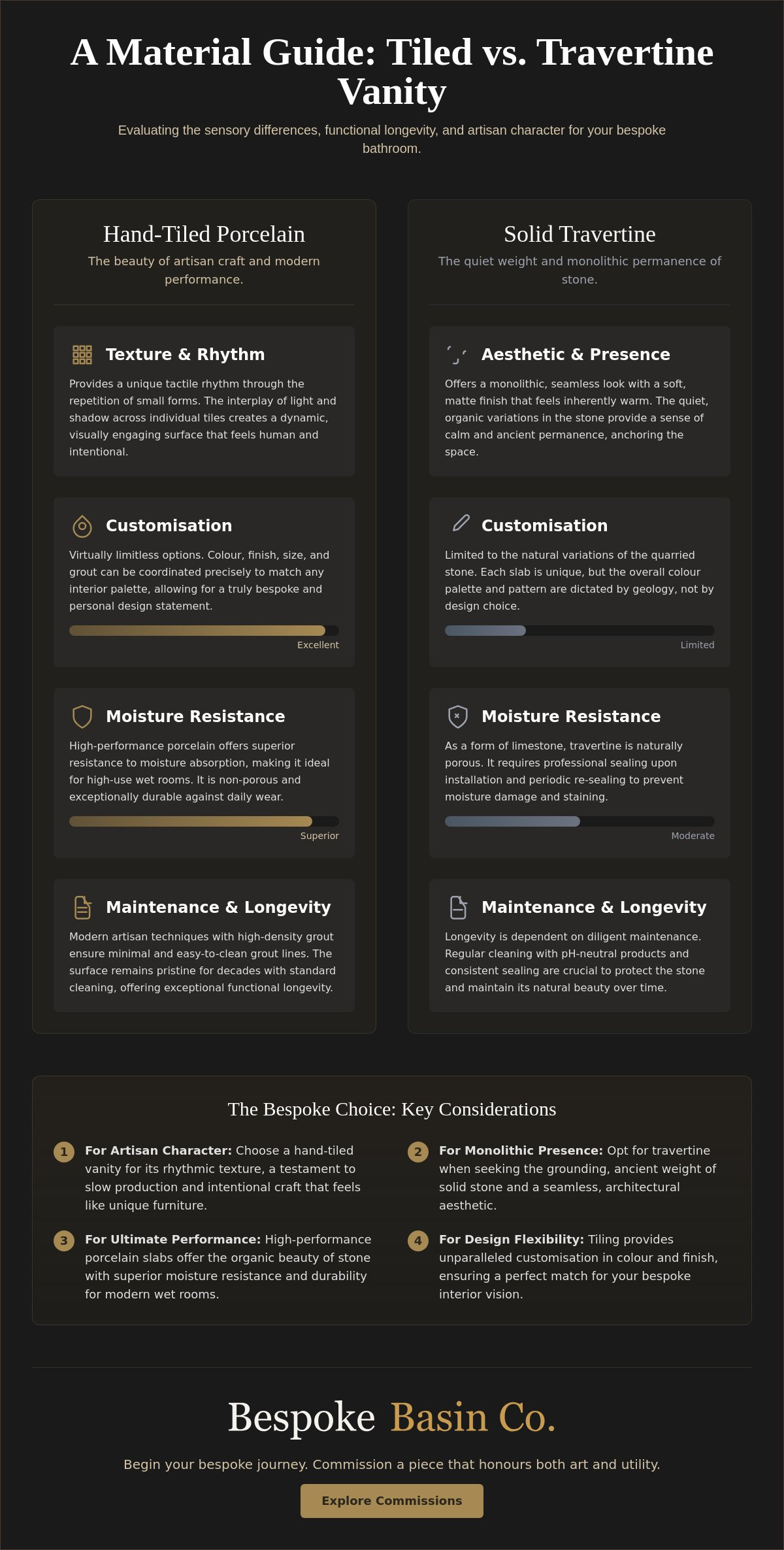
Maintenance and permanence. Beyond the grout line.
Resilience is quiet. It is found in the integrity of the bond between material and maker. When weighing the merits of a tiled vs travertine vanity, the question of maintenance often arises from a place of caution. We address this with precision. Modern artisan tiling utilises high-density grout and porcelain that resists moisture absorption effectively. The age-old anxiety regarding discoloured grout lines is a relic of poor material selection. We use epoxy solutions that remain colour-fast and impervious to the damp conditions of a UK wet room. Porcelain is a material that outlasts resin-based solid surfaces in 2026. It does not yellow. It does not degrade under the weight of time.
Solid surfaces require simple wiping with a soft cloth. They offer a monolithic ease. Tiled surfaces benefit from more intentional, tactile care that respects the geometry of the piece. Whilst travertine is a natural stone that requires periodic sealing to maintain its resistance to the elements, porcelain provides a high-performance alternative that mimics stone without the need for intensive chemical treatments. It is a choice between the raw organic state of nature and the refined durability of engineered clay. Both paths lead to a vanity that functions as a permanent fixture of the home.
Caring for your bespoke basin
The lustre of an artisan piece is preserved through gentle habits. We recommend pH-neutral cleaning agents that protect the integrity of porcelain and travertine finishes. Avoiding harsh chemicals is essential. Abrasive bleaches can strip the surface of its natural character and weaken the seals of a travertine vanity unit. For those who have chosen natural stone, our travertine vanity maintenance guide provides a detailed, rhythmic routine for preserving the artisan surface across decades of daily use. A daily wipe to remove standing water ensures that minerals do not settle into the texture of the stone or the rhythm of the tiles. It is a moment of care that ensures the object remains pristine for decades.
Longevity and home value
A bespoke commission is an investment in the architectural narrative of a property. Tiled vanities and custom slabs enhance the long-term resale value of a luxury home by offering something that cannot be found in a retail catalogue. There is a clear distinction between a fashionable retail vanity and a timeless artisan piece. Repairability is a significant factor in this longevity. The ease of replacing a single tile if damaged stands in stark contrast to the difficulty of repairing a cracked solid surface. One is a living, adaptable object. The other is a singular block that, once compromised, is difficult to restore.
If you are ready to select a material that honours the passage of time, we invite you to explore our range of bespoke tiling options to find the perfect foundation for your interior.
The bespoke commission. Elevating the vanity unit.
A bespoke vanity is a journey. It is a dialogue between the client, the designer, and the maker. It is not a simple transaction. When you move beyond the constraints of off-the-shelf retail, you enter a space of creative freedom. Choosing between a tiled vs travertine vanity is a decision about the rhythm of your home. It is about how a material occupies space and how it responds to the light of a morning. We move from a functional requirement to an intentional interior statement. The final object reflects a personal style that mass-produced fixtures can never achieve. It is a piece of furniture designed to last decades.
The workshop process. Patient craftsmanship.
At Bespoke Basin Co., we approach the design of an Organic Vessel Basin with a commitment to patient craftsmanship. We value substance over flashiness. This slow-making philosophy is the foundation of our workshop. It applies to every custom-sized porcelain slab and hand-tiled commission we undertake. We don’t rush the process. We understand that quality requires time. Every mitre cut is exact. Every tile is placed with architectural precision by our dedicated in-house team. We don’t use subcontracted labour. This ensures that the integrity of the design is maintained from the first sketch to the final installation. The hands that make the piece are the same hands that ensure it’s fitted correctly in your home. This continuity is vital for a bespoke result.
Your next steps. Planning the commission.
Preparing a design brief is the first step in the collaborative journey. It should balance the practical needs of the household with your aesthetic ambitions. Consider the environment. A master suite may allow for the ancient, monolithic weight of a Travertine Vanity Unit. A high-traffic family bathroom might benefit from the rhythmic texture and resilience of bespoke tiled basins UK crafted to the precise architectural specification of your space. We consult closely on material selection to ensure the final piece suits your specific goals. Our expertise helps bridge the gap between art and utility. Once the vision is clear, we manage the technical details of the build. Contact the studio to discuss your project requirements. We offer national UK installation for all our bespoke commissions. Quality is not a destination. It is a standard we uphold in every project we touch.
Defining your architectural legacy.
The choice between a tiled vs travertine vanity is ultimately a decision about how you wish to experience your private sanctuary. It is a balance between the rhythmic, tactile energy of hand-laid tiles and the quiet, monolithic weight of stone. We have explored how material integrity dictates longevity. You now understand why high-performance porcelain outlasts synthetic resins. You recognise that professional epoxy grout preserves the beauty of a tiled surface for decades. These are the details that transform a functional room into an intentional retreat.
Every piece we create is hand-crafted in our independent artisan studio with a focus on permanence. We provide specialised porcelain tiling solutions with no subcontracted labour to ensure the highest standard of finish. From architectural precision in every custom-sized porcelain slab to the delicate mitring of a vessel edge, our workshop prioritises substance. It’s time to move beyond the clinical feel of the showroom. You deserve a piece that reflects the dedication of its maker. Commission your bespoke vanity at Bespoke Basin Co. and bring a sense of calm and craft into your home. Your vision is the beginning of a beautiful, lasting object.
Frequently Asked Questions
Is a tiled vanity harder to clean than a solid surface travertine one?
A hand-tiled vanity requires more intentional, tactile care than a seamless surface, but it is not inherently difficult to maintain. High-performance porcelain and modern epoxy grouts are non-porous and resist staining effectively. Whilst a solid stone surface allows for a quick wipe, the geometry of a tiled piece simply asks for a soft cloth to reach every line. It’s a rhythmic part of home maintenance that preserves the artisan integrity of the piece.
Can I use custom porcelain slabs to achieve a travertine look for a vanity top?
Custom-sized porcelain slabs are an excellent solution for achieving the ancient, organic look of a travertine vanity unit with superior durability. Modern texturing techniques allow porcelain to mimic the soft, matte finish and unique veining of natural stone. These slabs provide a non-porous surface that resists bacteria and moisture. They are ideal for the humid conditions of a UK wet room where natural stone might require more frequent sealing. For a comprehensive overview of how to specify and commission these surfaces, our bespoke porcelain tiled basin UK buying guide details the technical requirements of large-format slabs and the precision of mitred edges.
What is the best grout to use for a hand-tiled vessel basin to prevent staining?
High-density epoxy grout is the superior choice for any hand-tiled vessel basin. Unlike traditional cement-based grouts, epoxy is completely non-porous and colour-fast. It acts as a permanent seal that prevents moisture absorption and staining. This ensures the rhythmic lines of your bespoke tiled basins remain pristine for decades without the need for aggressive chemical cleaning. Quality is found in these small, technical details.
How do I decide between a natural travertine vanity unit and a porcelain slab alternative?
The decision between a tiled vs travertine vanity often depends on your tolerance for the natural evolution of materials. Natural travertine is a sedimentary stone that requires periodic sealing and develops a unique patina over time. A porcelain slab alternative offers a similar monolithic aesthetic with zero maintenance requirements. Choose natural stone for its ancient soul, or porcelain for its uncompromising functional permanence and resilience.
Are bespoke tiled basins suitable for high-traffic commercial bathrooms in the UK?
Bespoke tiled basins are highly suitable for commercial environments when constructed with high-performance porcelain. Their durability and the ease of repair-replacing a single tile rather than an entire unit-make them a practical choice for high-traffic areas. The use of epoxy grout ensures they meet the stringent hygiene standards required for commercial wet rooms in the United Kingdom. It is a marriage of art and utility.
Do solid surface vanities scratch more easily than porcelain tiles?
Resin-based solid surfaces are significantly more prone to scratching and heat damage than porcelain tiles. Porcelain is one of the hardest materials available, offering a surface that is incredibly difficult to mar. Whilst a resin surface may yellow or dull over time, a porcelain-tiled vanity maintains its surface lustre and integrity. It is a guardian of quality that withstands the rigours of daily use without losing its character.
Can a bespoke tiled basin be made to any size for a specific project?
Our workshop specialises in creating basins that are tailored to the specific architectural requirements of your project. Every piece is an intentional interior statement. We can adjust the dimensions, depth, and edge profiles to suit your specific space. This level of customisation ensures the final object feels like a piece of bespoke furniture. It is designed to fit your home with absolute precision. Those navigating non-standard dimensions may find our porcelain slab basin UK architectural guide a useful resource for understanding how large-format slabs can be specified to achieve a seamless, monolithic result.
How long does a custom vanity commission typically take from design to installation?
A custom commission is a methodical process that typically spans several weeks from the initial design brief to final installation. We prioritise quality over speed. This duration allows for the patient craftsmanship required to cut every mitre and lay every tile with precision. We lead you through a steady progression. This ensures the finished result meets our uncompromising standards of artisan integrity and functional longevity.